

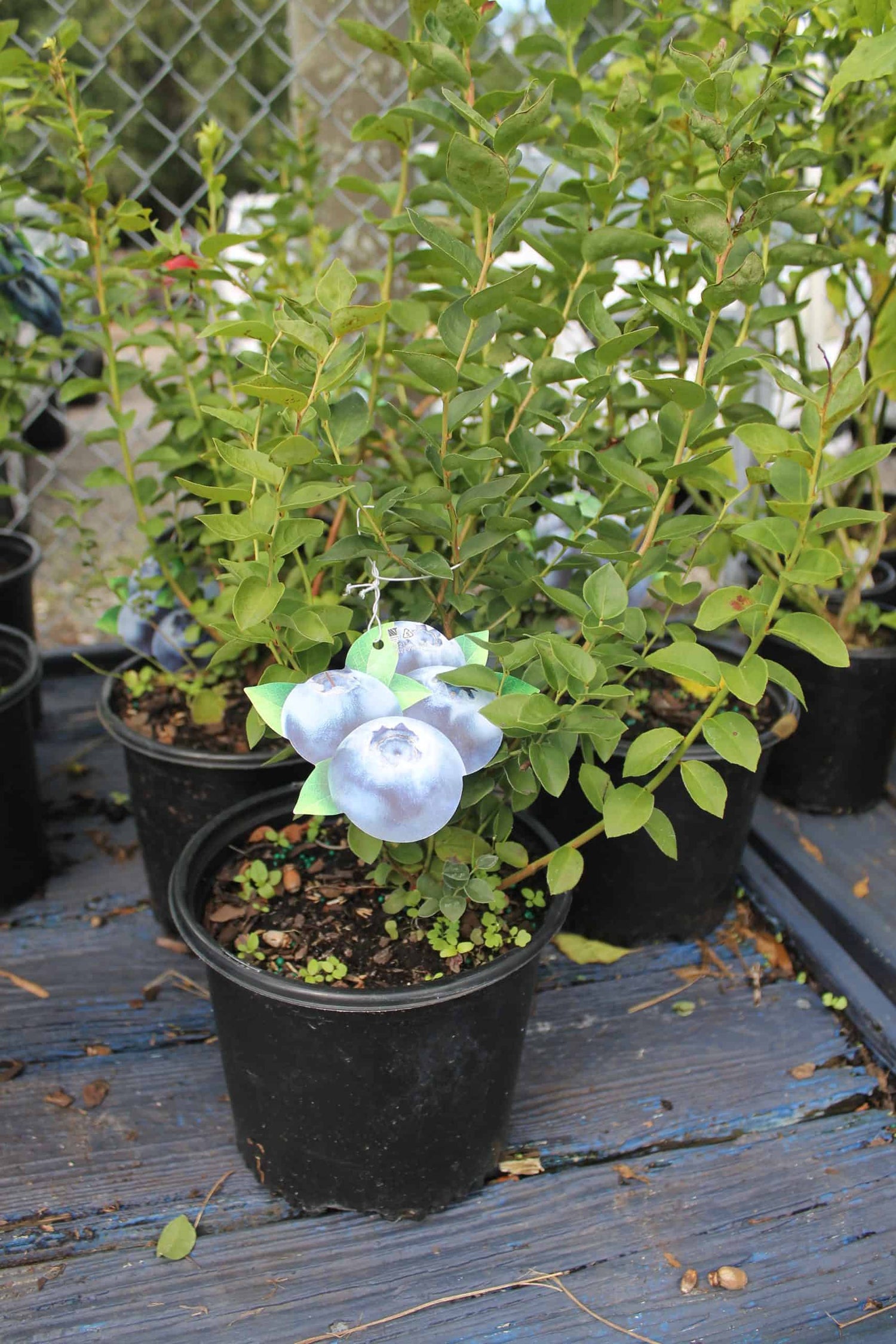
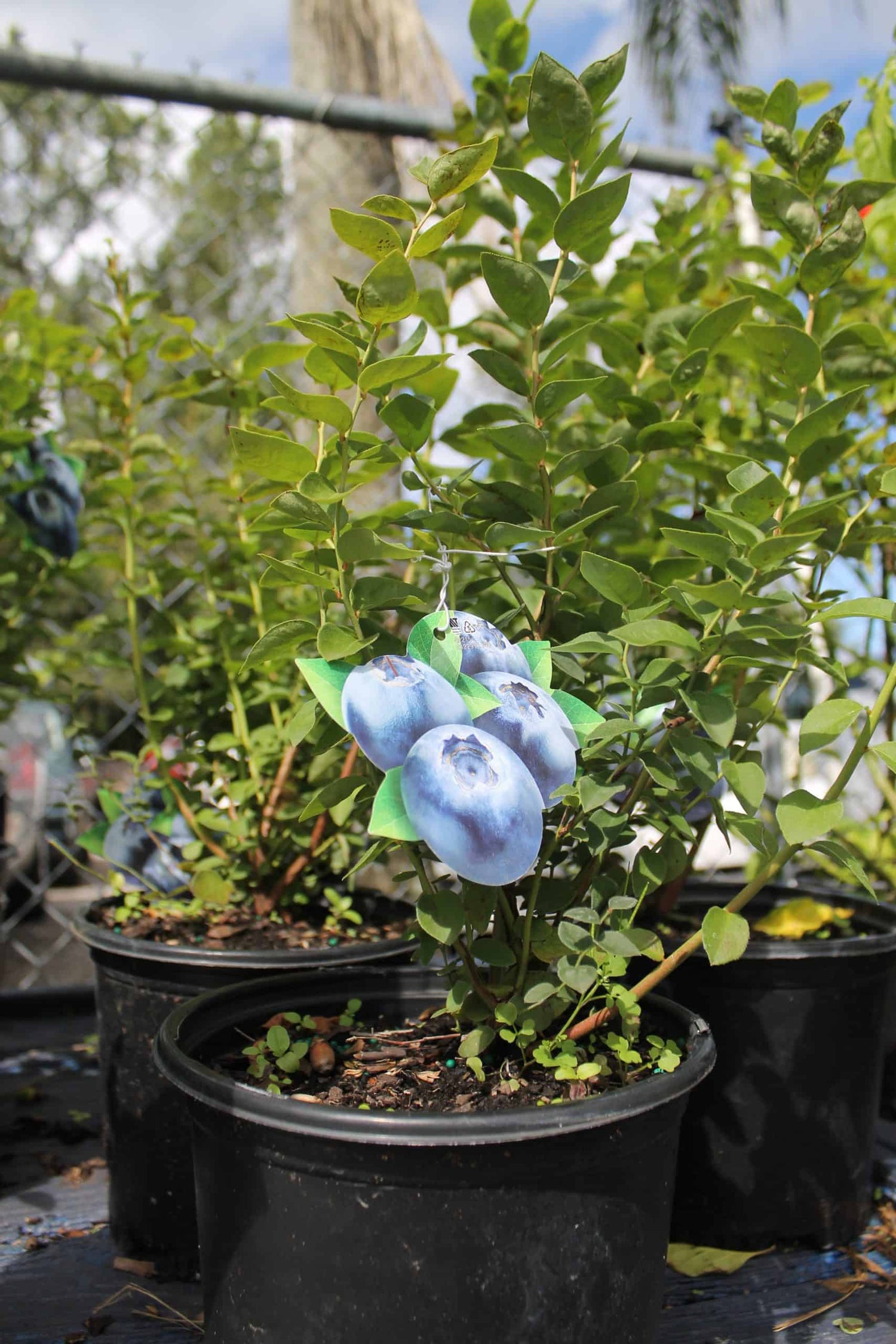
Blueberry
AVAILABLE IN-STORE ONLY due to limited and inconsistent availability. Please call or visit your local store for current stock.
Delivery and Shipping
Delivery and Shipping
Delivery timeframes are estimates and are not guaranteed. Please note that delivery is to the end of the truck only and does not include installation. For additional details, please review our full Shipping and Delivery Policy.

Blueberry
Vaccinium spp., commonly known as blueberry, is a deciduous fruiting shrub prized for its sweet, antioxidant-rich berries and brilliant fall foliage. Fun fact: blueberry plants can remain productive for 30–50 years with proper care, making them one of the longest-lived fruit crops for home gardens. Their spring flowers also provide an excellent nectar source for pollinators.
Care Needs:
• Light: Full sun
• Water: Keep soil consistently moist but well-drained, especially during flowering and fruit development
• Pruning: Prune in late winter while dormant to remove old, weak, or damaged canes and encourage vigorous new growth
• Fertilizer: Apply a fertilizer formulated for acid-loving plants in early spring and again after harvest if needed
Attributes
-
Plant TypeDeciduous fruiting shrub
-
USDA Zone3 - 10
-
OriginNorth America
-
ToxicityNot known to be toxic
-
Mature Height2-8 ft
-
Mature Width2-6 ft
-
Soil PreferenceAcidic, well-drained soil rich in organic matter
-
Spacing3-6 ft
-
Growth RateModerate
-
Critter ResistantNo
-
Salt ToleranceLow
-
Cold ToleranceModerate
-
FloweringYes
-
Bloom PeriodSpring
-
Flower ColorWhite to pale pink
-
Stem ColorBrown to reddish-brown
-
Foliage ColorGreen


